Mimi Ọnụọha:
The Hair in the Cable
These Networks In Our Skin, 2021
Moving Image (looped)
Duration: 5:48:00
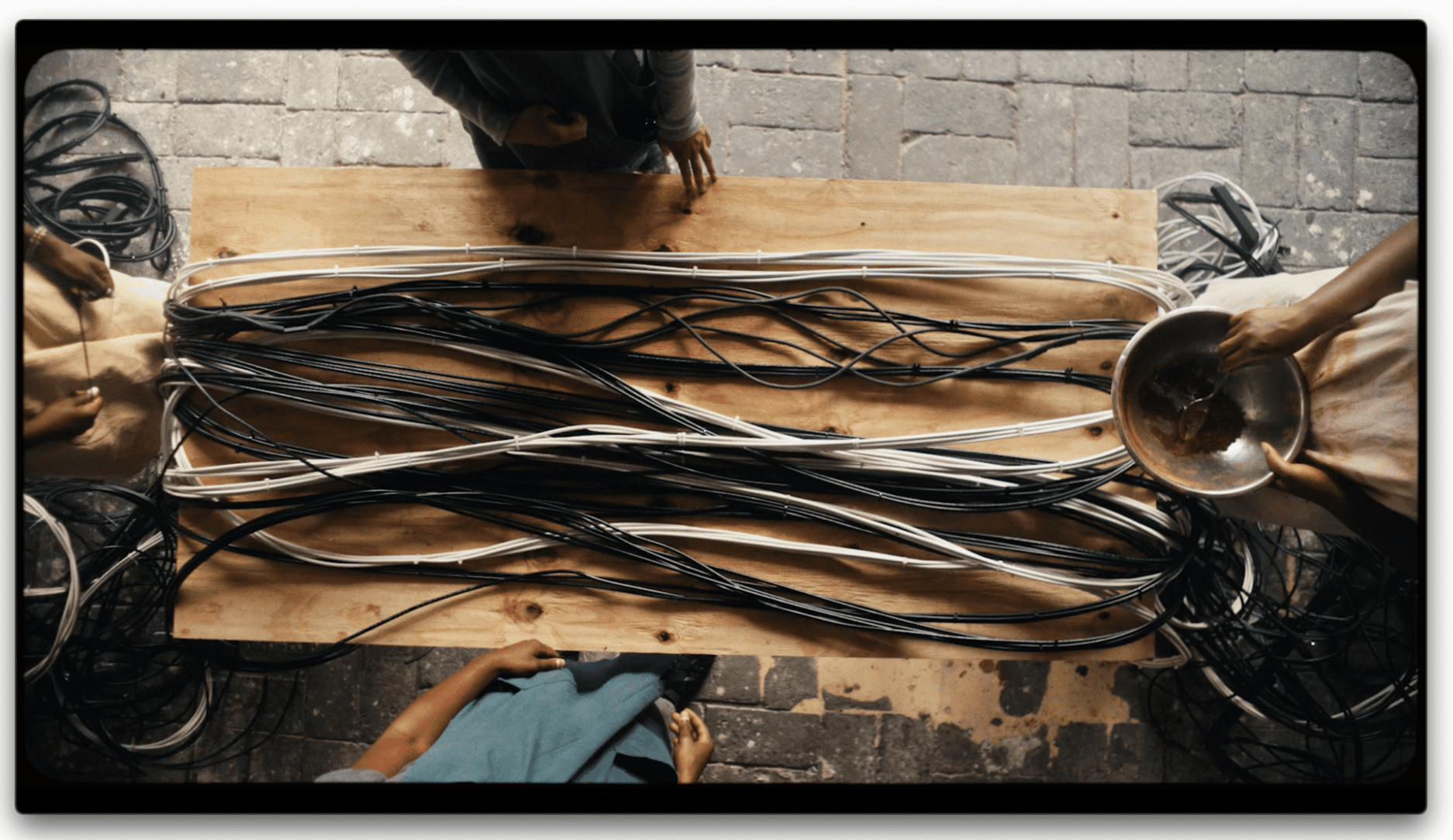
This is a film — or maybe a vision — about us and our networks: how we can be, or how they could be, or how we used to be, or what we will be.
These Networks In Our Skin depicts four women who work to rewire the cables that carry the information that powers the world. The short film draws from traditional Igbo cosmology to offer a dreamlike visual lexicon of what it might mean to recreate the Internet, starting from the values infused in the cables that make it up. Surreal, familiar, and disquieting all at once, the film lives in a space between things that could happen and things that do.
Natural: or Where Are We Allowed To Be, 2021
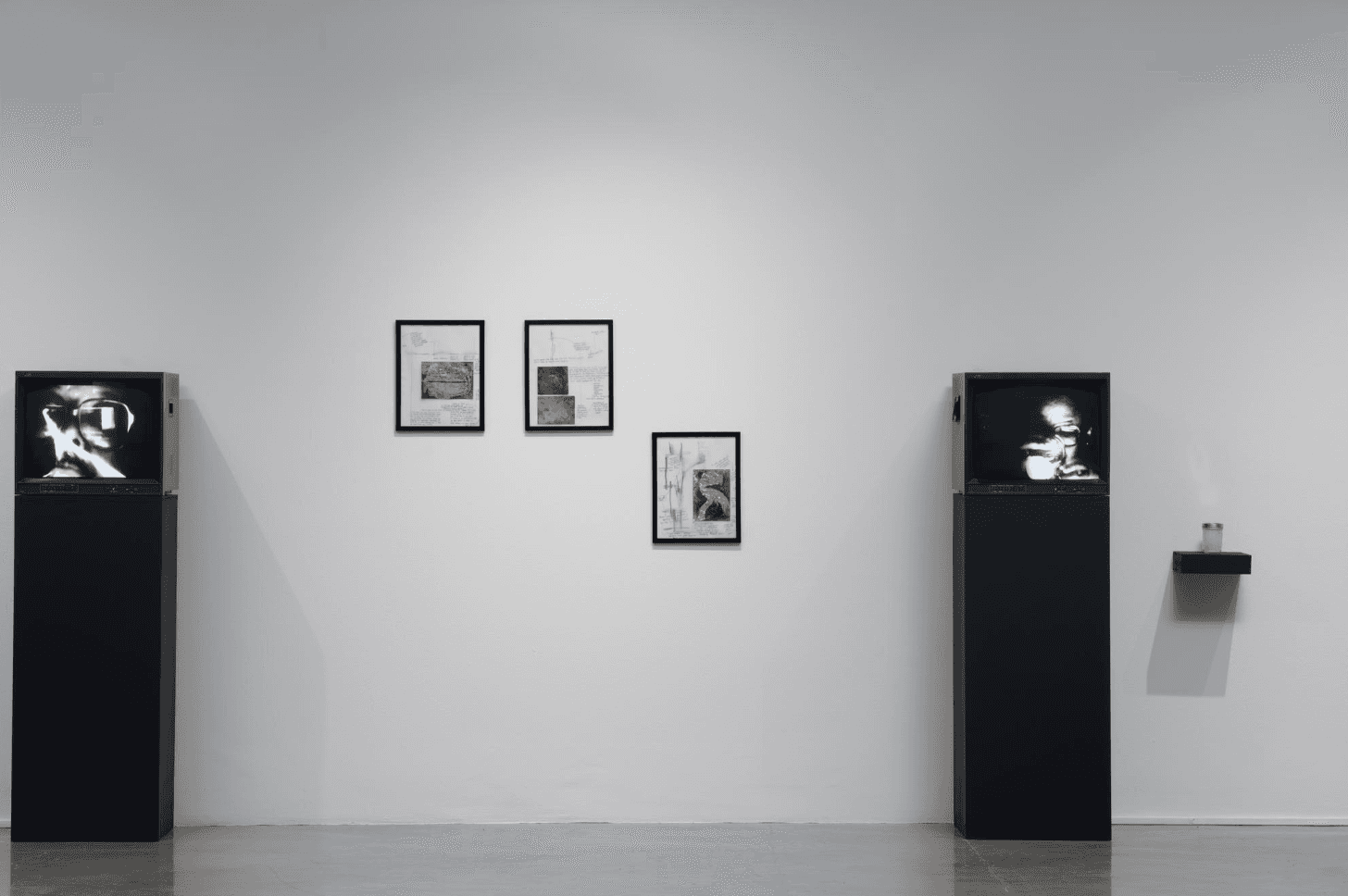
3 film prints with captions, mounted on sintra
36” x 48” (Size of each print)
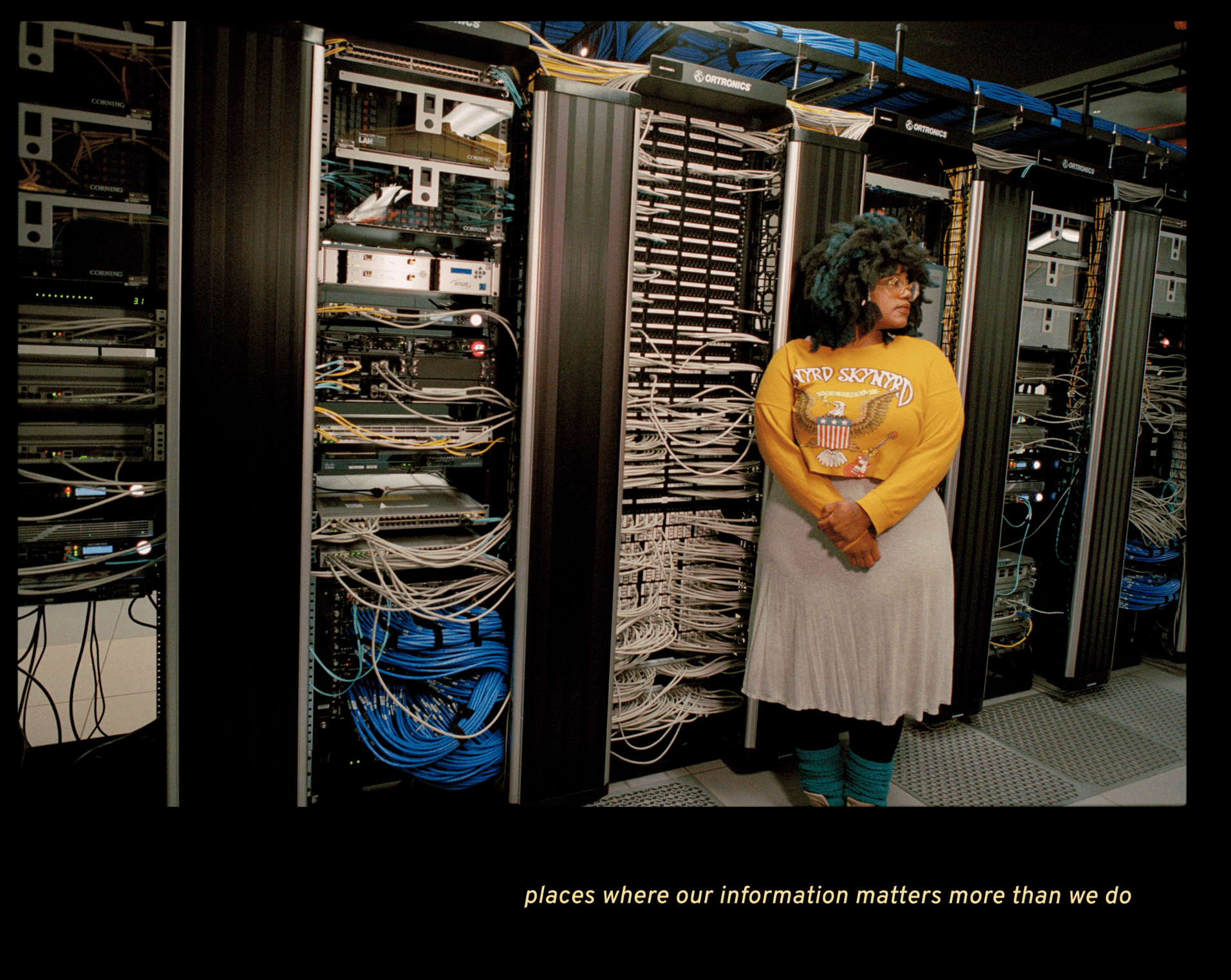
Where are we allowed to be? Where are the places that it is seen as natural for us to assert our presences? Who has ownership or control over those places and the narratives that feed into them? In the three prints that make up Natural: or Where Are We Allowed To Be, a Black woman wanders through a data center that carries her own information and asserts answers to the question of what her relationship to the place should be.
The Cloth In The Cable, 2022
Mixed media installation
Cables, cloth, hair, dust, spices, herbs
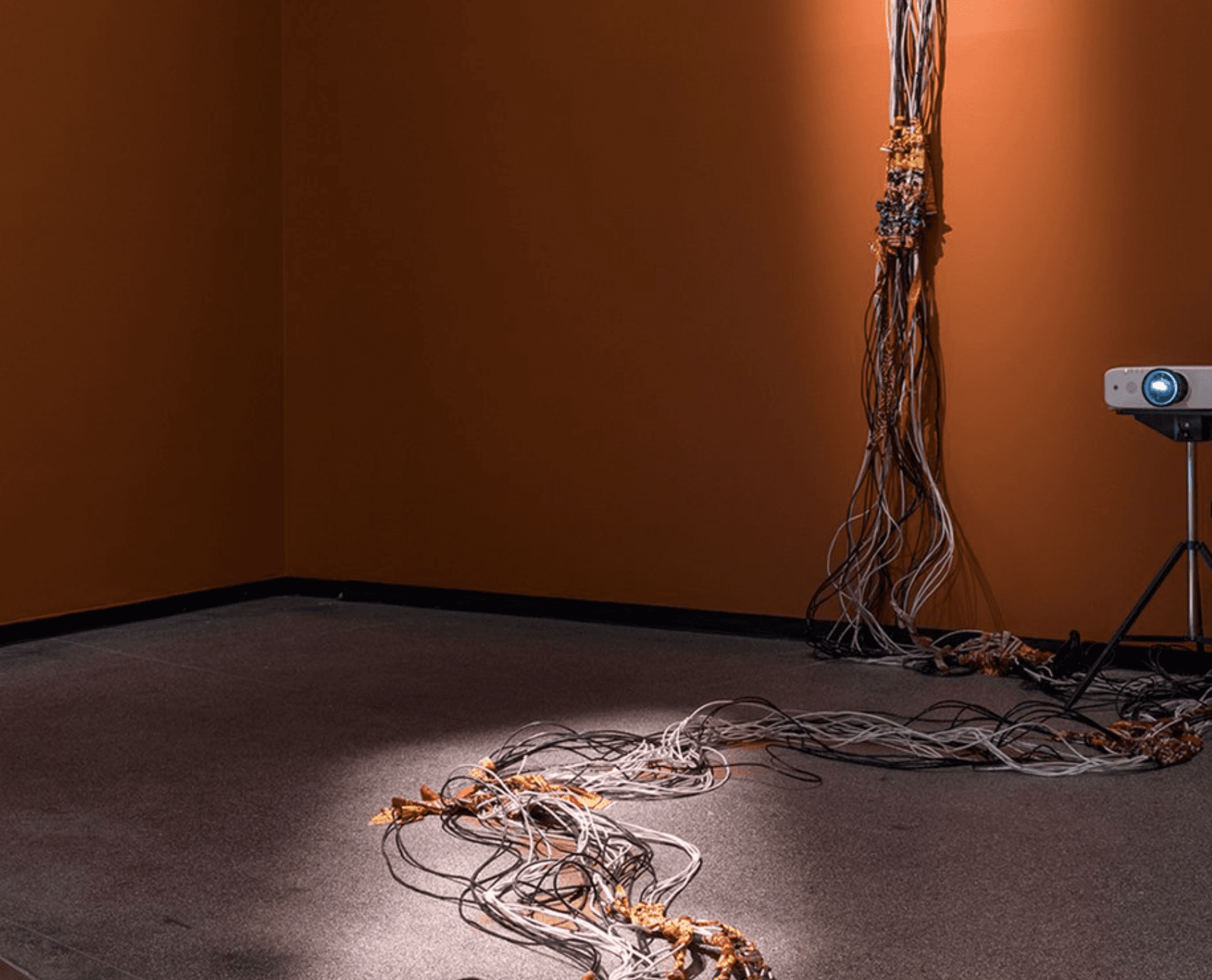
Installation in which the artist wraps internet cables — the veins through digital information travels — in hair, cloth, dust, and spices that hold significance in Igbo culture. The installation is a gesture towards infusing modern technical systems with values and ontologies from other cultures.
Kameelah Janan Rasheed:
i want to climb inside every word and lick the salty neck of each letter
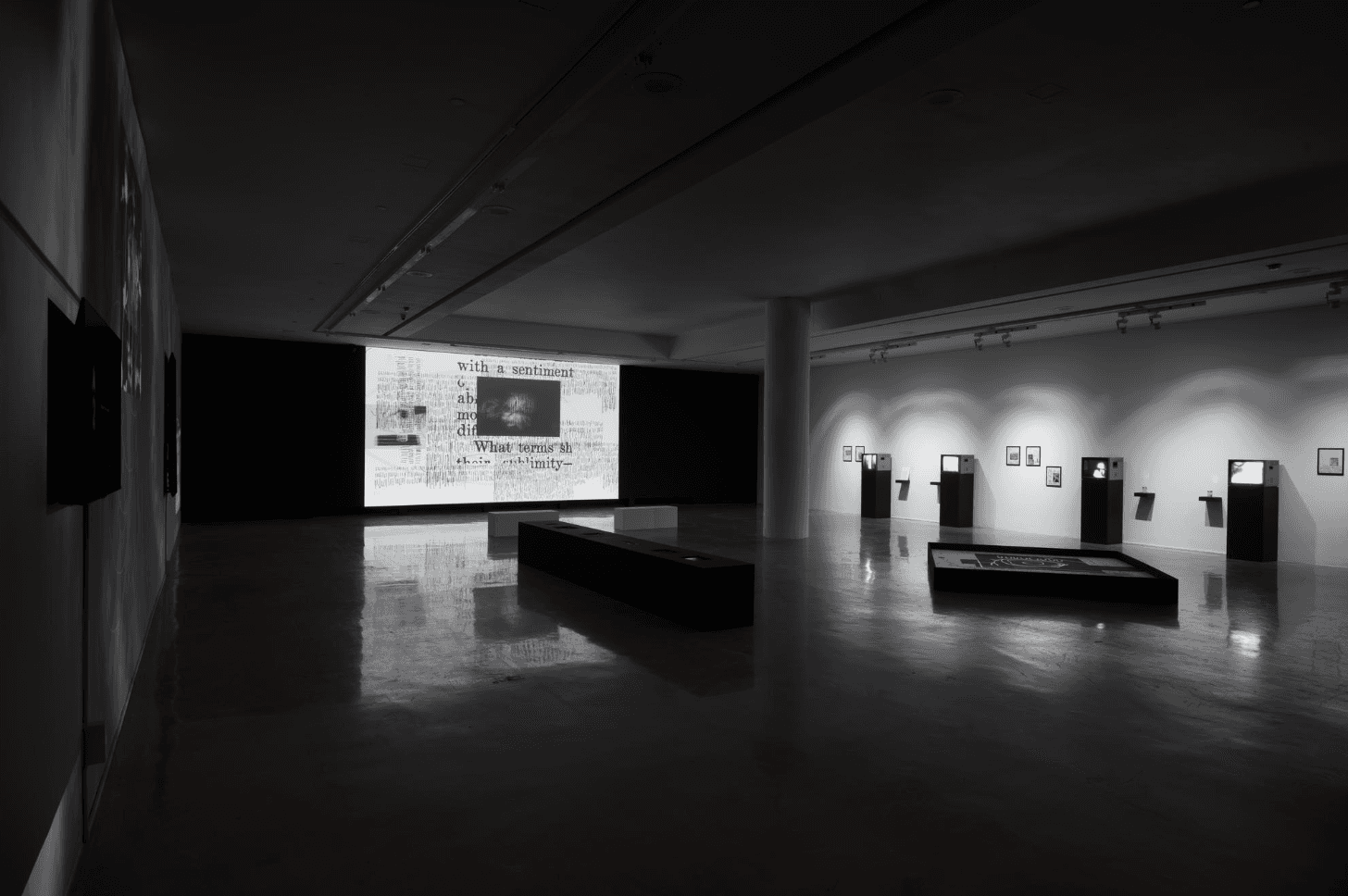
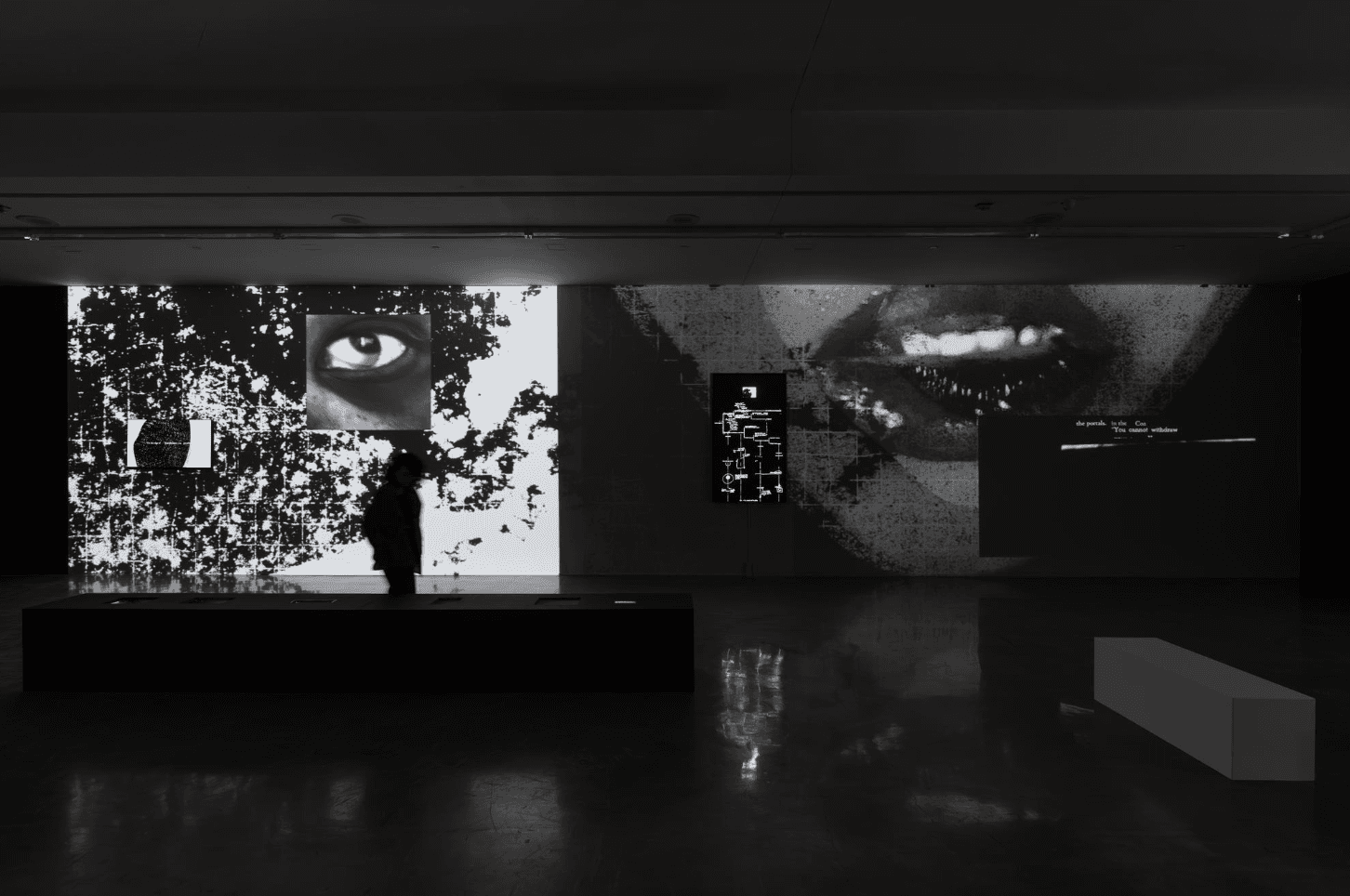
Rasheed’s exhibition at REDCAT is an homage to formative experiences of the interspecies, interspiritual, and language-rich environment in which she grew up: on marshlands and nature reserves exploring markings and droppings left by animals; in Islamic studies courses memorizing the choreography of her body to pray and her hand to scribe Arabic; in Catholic school reflecting on Biblical exegesis; and delving into her parents’ bookshelves of religious texts, Black literature, science textbooks, and political theory. These profound forms of communication–expressed through the body and its gestures–inform Rasheed’s immersive text-based work and touch on the desire not just to read and learn, but to engage with language so deeply it can be physically felt. Videos of her ingesting, rubbing, and licking language point to poet and activist Audre Lorde’s understanding of the erotic as a source of power and knowledge rooted in the act of feeling and in the desire to be overtaken by experience itself.
Embracing the sensorial, Rasheed incorporates into the exhibition natural materials from the marsh that have been gathered by the artist’s family. A new series of light-sensitive prints are made by washing photosensitive paper in water from various locales and pressing the artist’s weight into them. The exhibition presents an immersive constellation of letters, words and non-words, moving images, body gestures, rituals and sounds that engage the erotics of reading and writing and transgress the limits of linguistic description. The exhibition also stages experimental conversations between writer and exile Clarice Lispector, French philosopher Roland Barthes, LA based poet Harryette Mullen, and artist Pope.L that are concerned with the intimacies, desires, and frustrations held in using language to describe an experience or animate a memory.